Meet ACR's First Artist in Residence: Charity Ridpath!
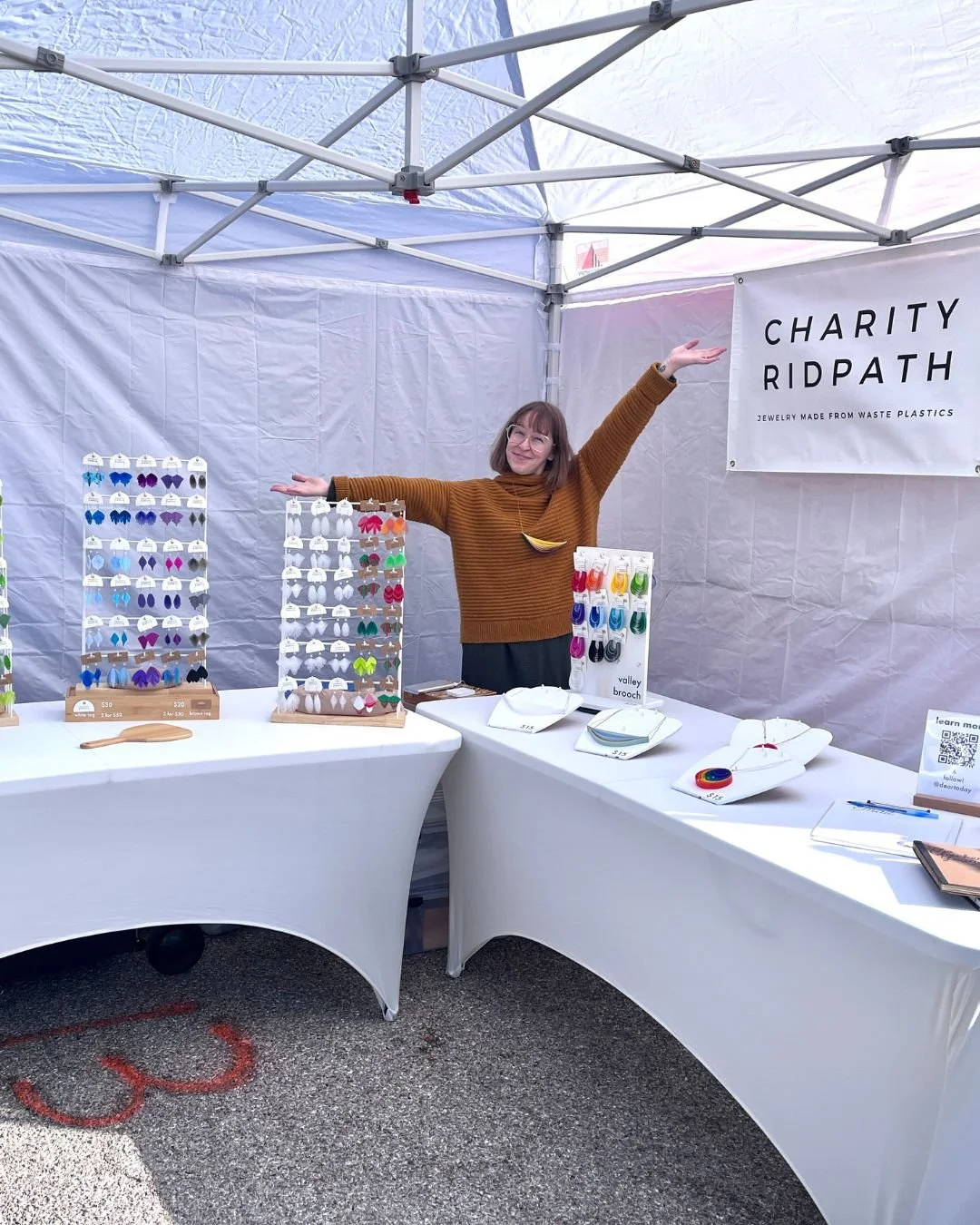
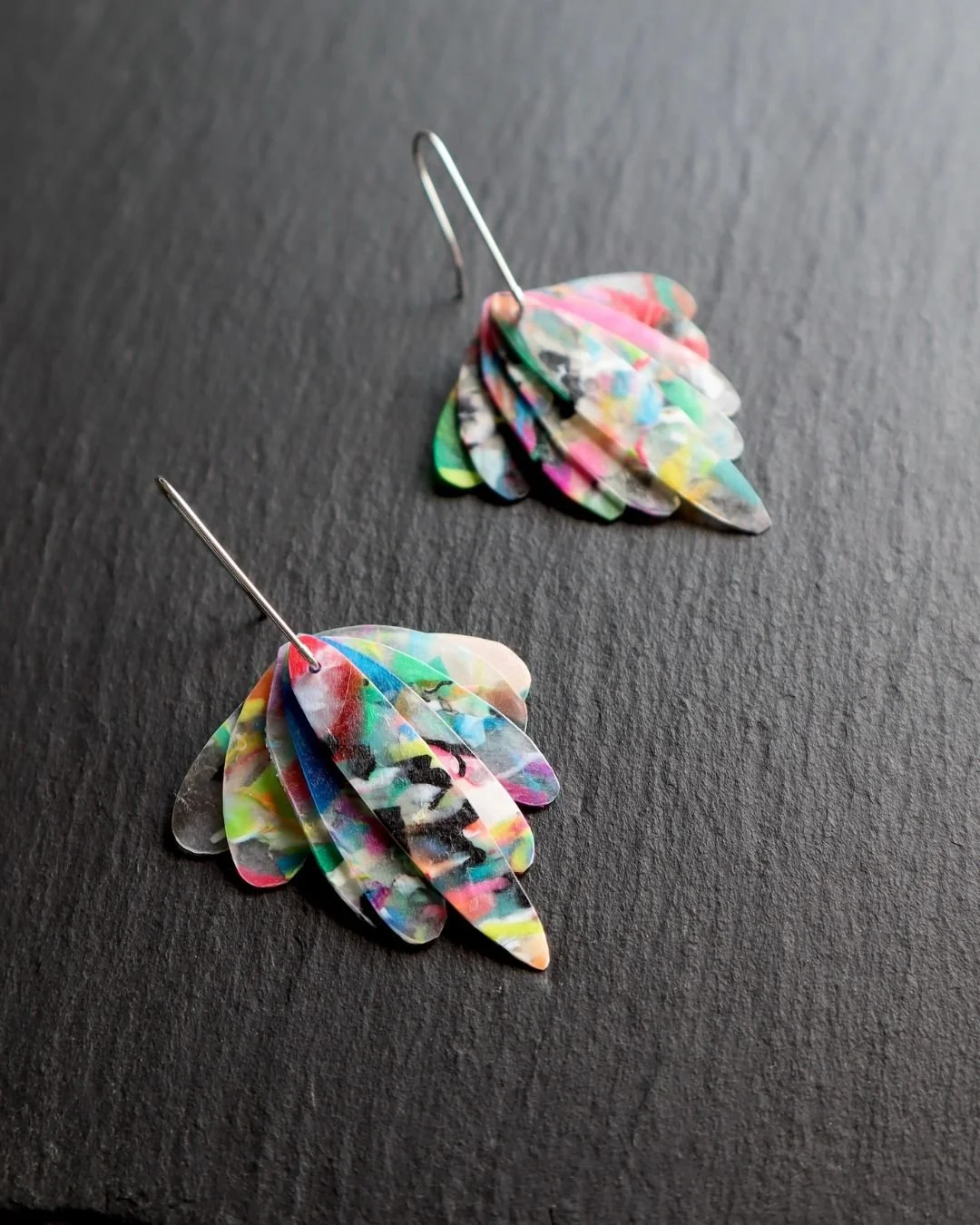
Austin Creative Reuse is excited to introduce our first Artist in Residence: Charity Ridpath! Charity has been part of ACR’s creative reuse community since 2017, when she discovered us while searching for unconventional materials to use for a jewelry class. Since then, she has been a regular fixture at our Reuse Art Markets, selling her colorful reuse jewelry made from discarded plastic folders. Now focused on exploring ecological grief through traditional mourning jewelry and attire, her residency will bring the Austin community into her creative process, allowing viewers a unique view into how art gets made through open studio sessions in our classroom space, as well as soon-to-be-announced activities and events throughout the four month residency, running from August 15-December 15, 2026. Read on to learn more about Charity and stay tuned for more info about upcoming events related to her residency!
Congratulations on being selected as Austin Creative Reuse’s first Artist in Residence! How long have you been part of ACR’s creative reuse community and what drew you to this opportunity?
Thank you! My first visit to ACR was back in 2017. I was taking a jewelry class focused on gem setting and wanted to practice on unconventional materials. I wish I could bottle the excitement I felt walking in. Everywhere my eye landed was a spark of inspiration.
I was drawn to this opportunity because getting to create new work and explore new ideas around other people who are passionate about creative reuse feels like such an incredibly nutritious space to make art from.
What do you hope to get out of your residency?
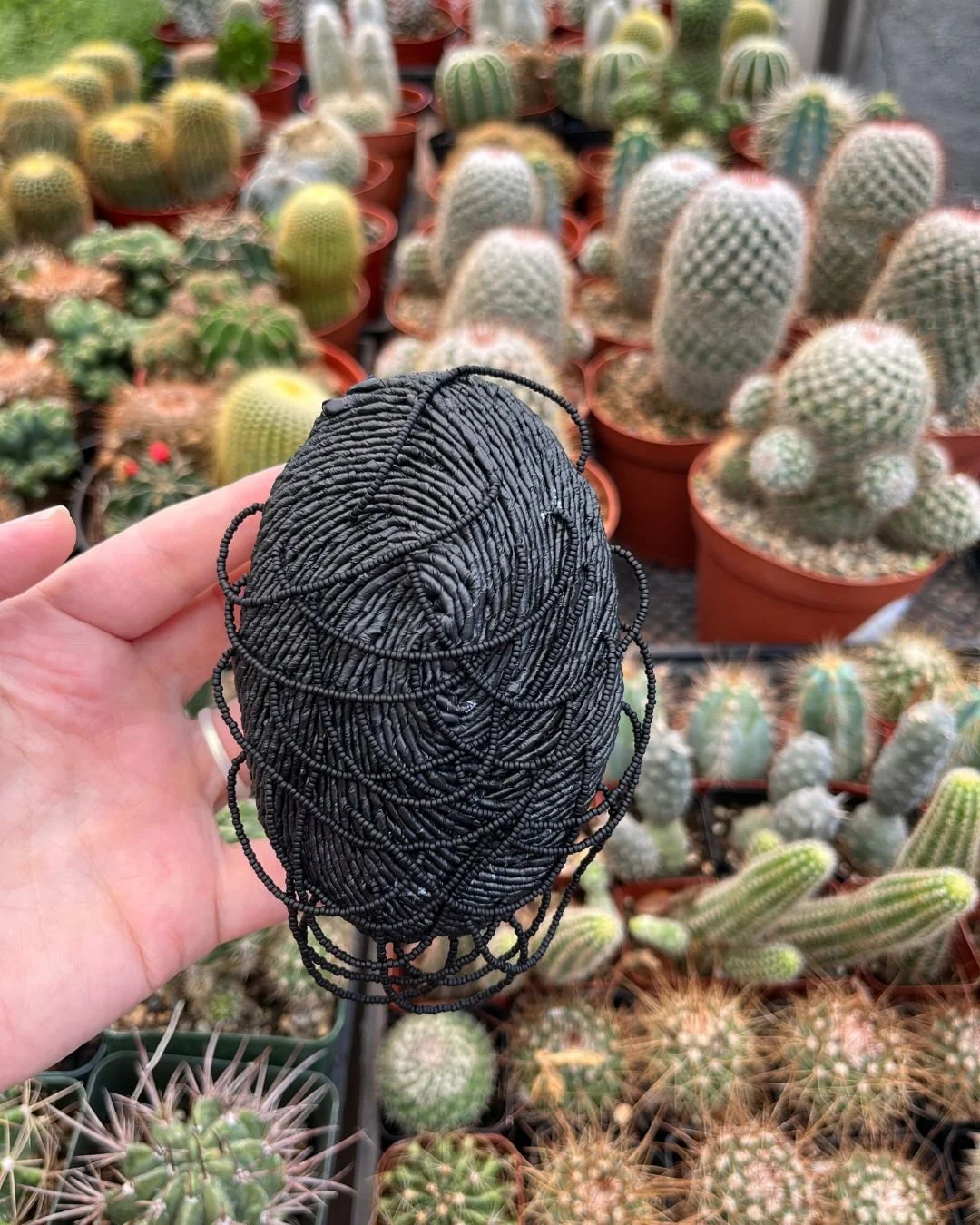
I plan to focus on a new body of work about ecological grief using traditional mourning jewelry and attire as a creative starting point. Knowing I will be sharing what I am working on with others is almost like having new people and new ideas in the studio with me. I learn so much from what other people say about my work, and from telling people about my work, and this feels like a really unique opportunity to do that amidst such an engaged and passionate community. I also hope to explore new-to-me reused materials!
What opportunities will there be for our community to get involved in your work over the next four months?
I am super excited about community involvement. I will be having a monthly open studio in the classroom at ACR where people can come see what I have been up to. I will be sharing my samples, experiments, research, inspiration, works in progress, and finished work. I am an open book, so I am looking forward to sharing what I am up to and answering questions!
There will also be a few special events that are still in the works but will include things like demos and an artist talk. I want to create opportunities for other makers and creative reuse appreciators to see parts of themselves in my work and hopefully walk away inspired.
When did you learn to make jewelry and how did you start using recycled materials in your work?
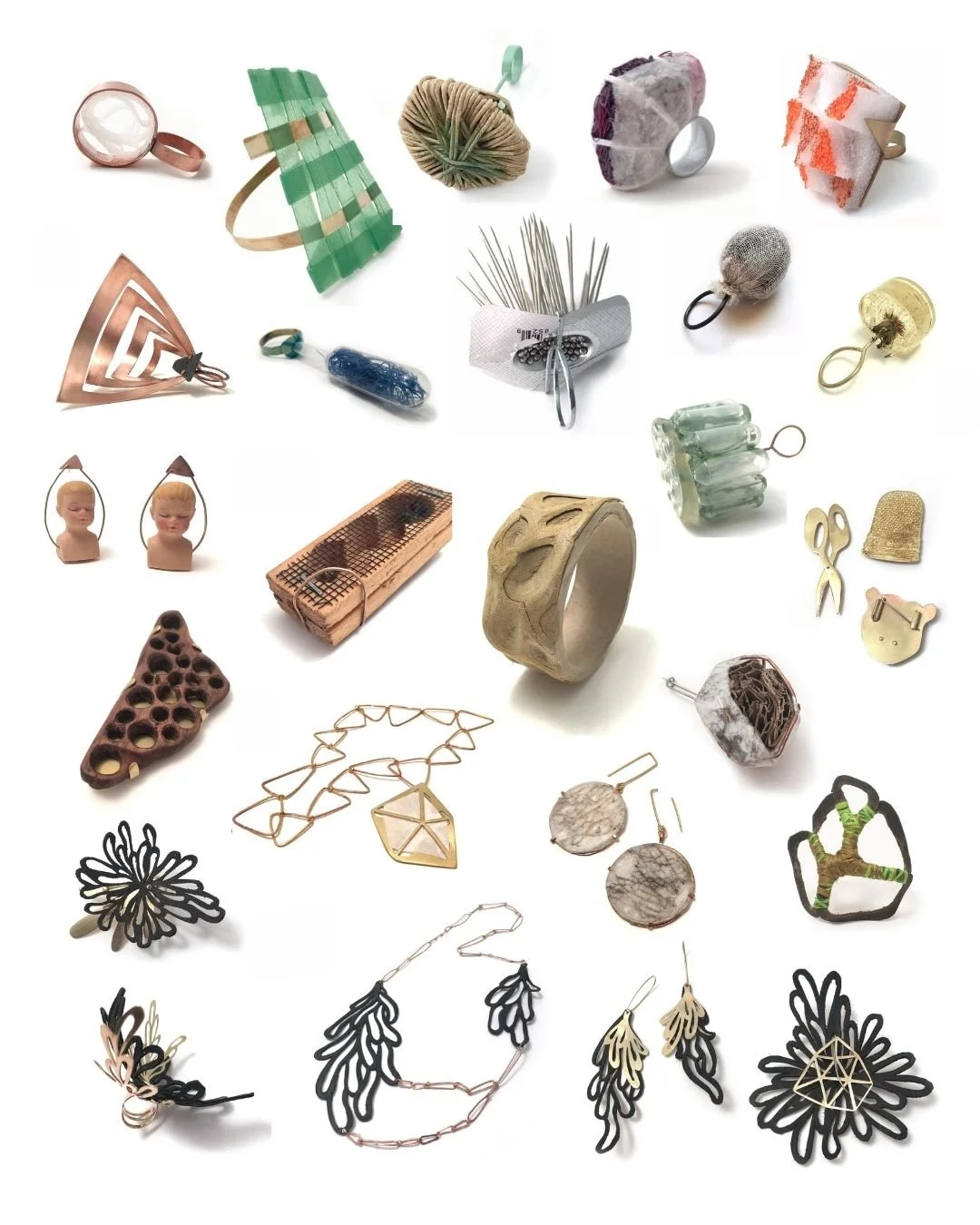
I can’t really remember a time when I wasn’t using recycled materials, either because they were financially accessible or because growing up I remember experiencing an emphasis on conserving and reuse. I can think of several times I made jewelry but didn’t really consider myself a jewelry maker. I used to make elaborate word necklaces from salad containers turned into shrinky dinks. I also made embroidered cameo brooches of animals from vintage fabric and lace scraps.
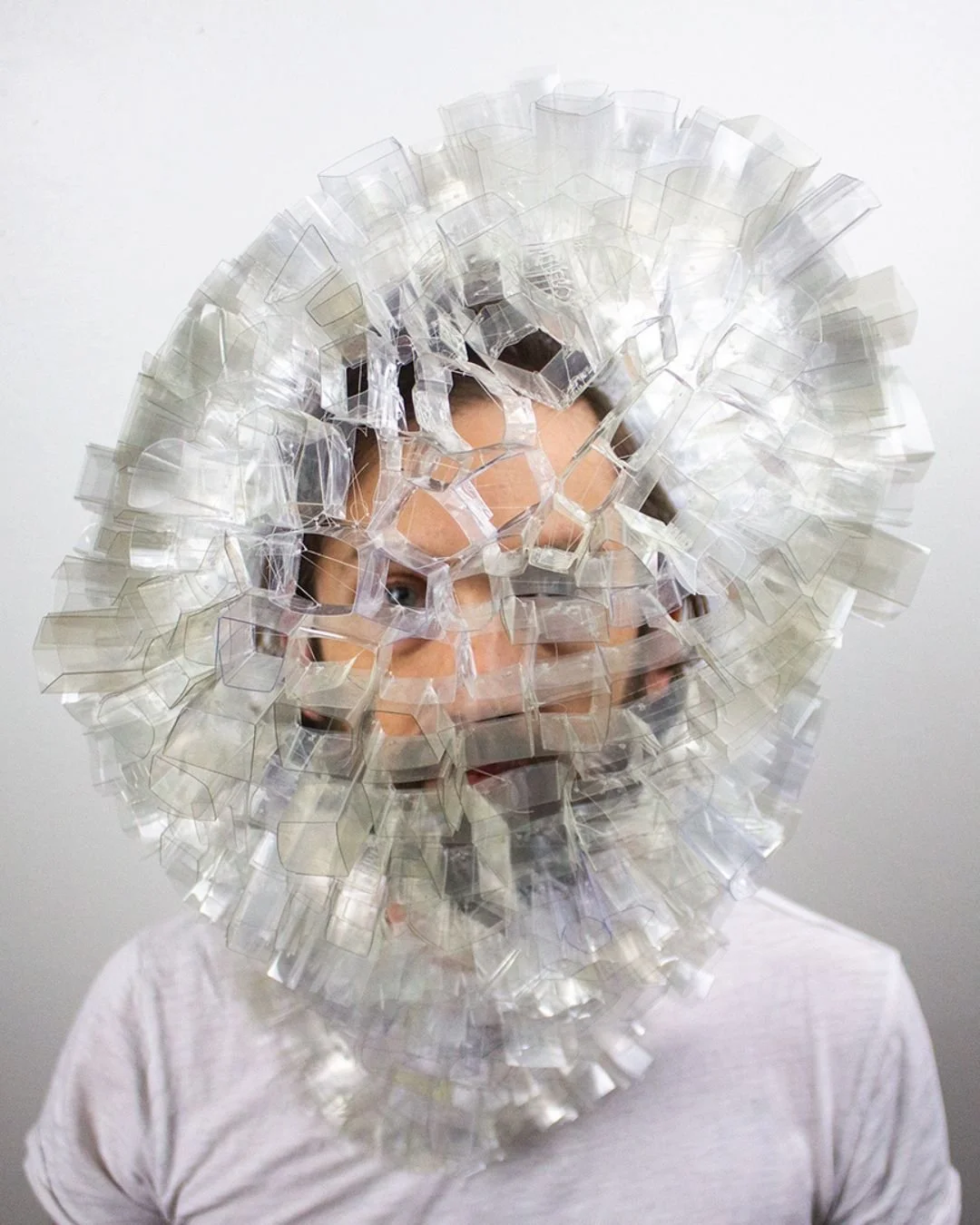
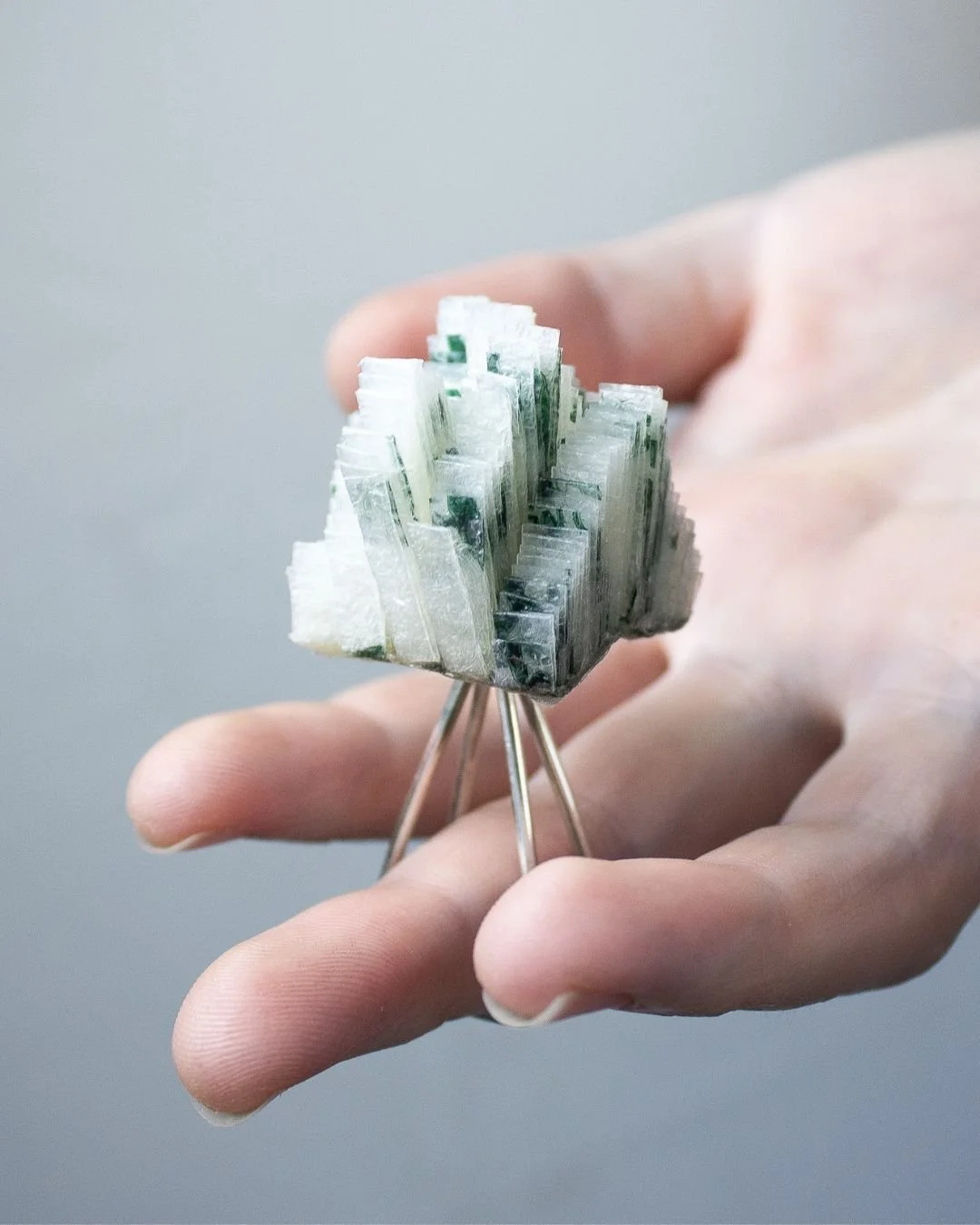
It wasn’t until I went to art school and learned about art jewelry that I started to think about jewelry as an art medium. I learned there is a history of jewelry makers using unconventional materials in their work to question notions of preciousness, value, and status. Seeing artists use the meaning of materials as a visual metaphor felt like being introduced to a whole new language. And since then, I have loved getting to create my own visual language by using single-use plastics in jewelry to represent bigger ideas.
Do you have other creative hobbies?
I sometimes feel like my creative hobby is collecting creative hobbies. Over the years I have learned embroidery, knitting, quilting, printmaking, sewing, watercolor, and writing. Honestly, the list goes on.
In my experience meeting other creative reuse makers, a lot of us are like this. Being a hobby collector has given me such a big toolbox of skills, tools, and techniques to apply when working with unconventional art materials.
Which aspect of creating is your favorite?
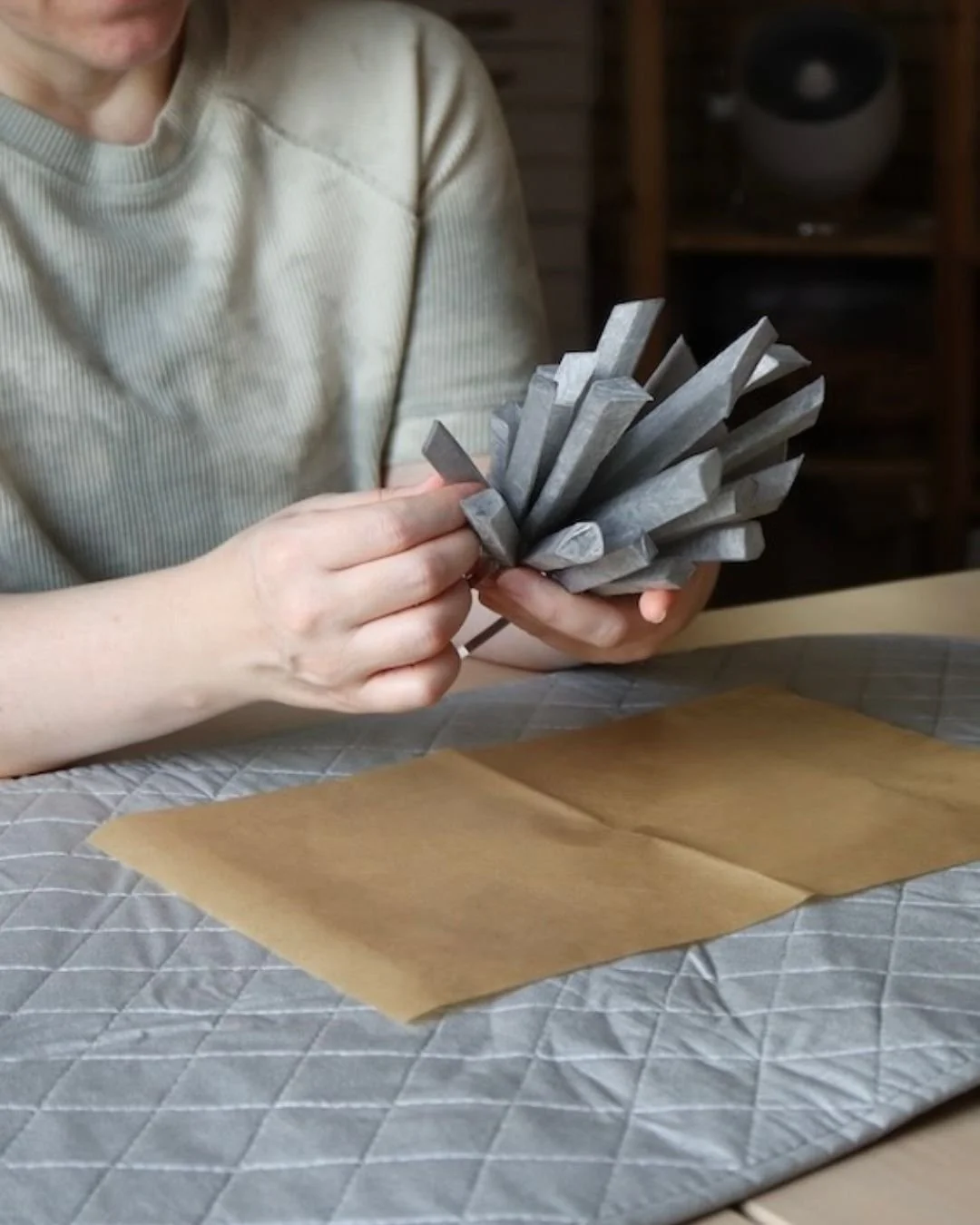
The discovery process. I love taking a material that isn’t a traditional art material and seeing what it can do. I feel like a scientist, making hypotheses and creating tests. It starts a bit chaotic, and I often worry that I have bitten off more than I can chew. But eventually things start to feel in harmony, I start to see potential, and I get a flood of new ideas.
Where do you get your inspiration?
I often feel like getting inspired is like making soup. I find several things I am interested in, like images, current events, colors, experiences, stories, other artists’ work, creatures, and speculative futures, and let them simmer. The combination of inspirations builds its own flavor with time, and that tends to be where my ideas come from.
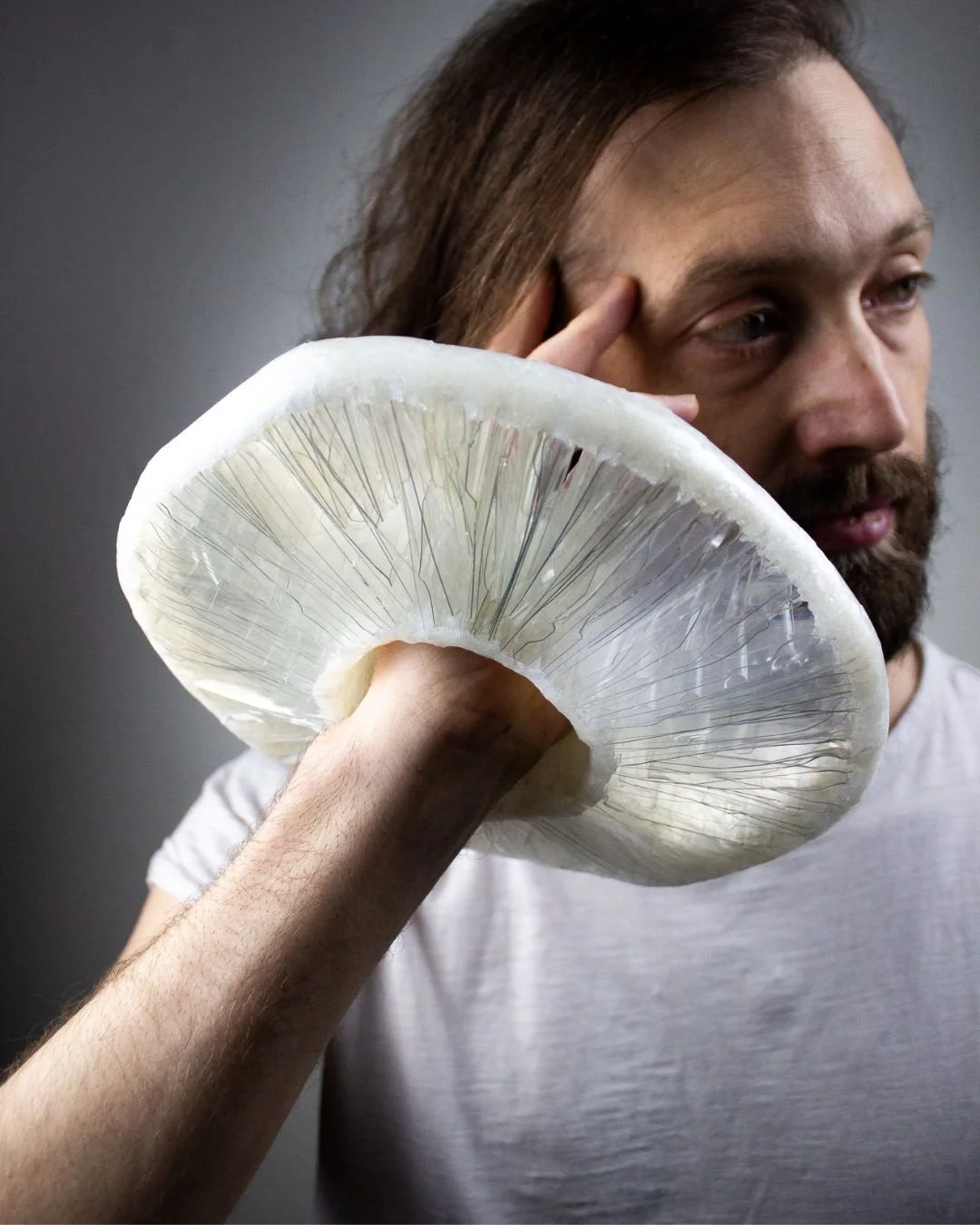
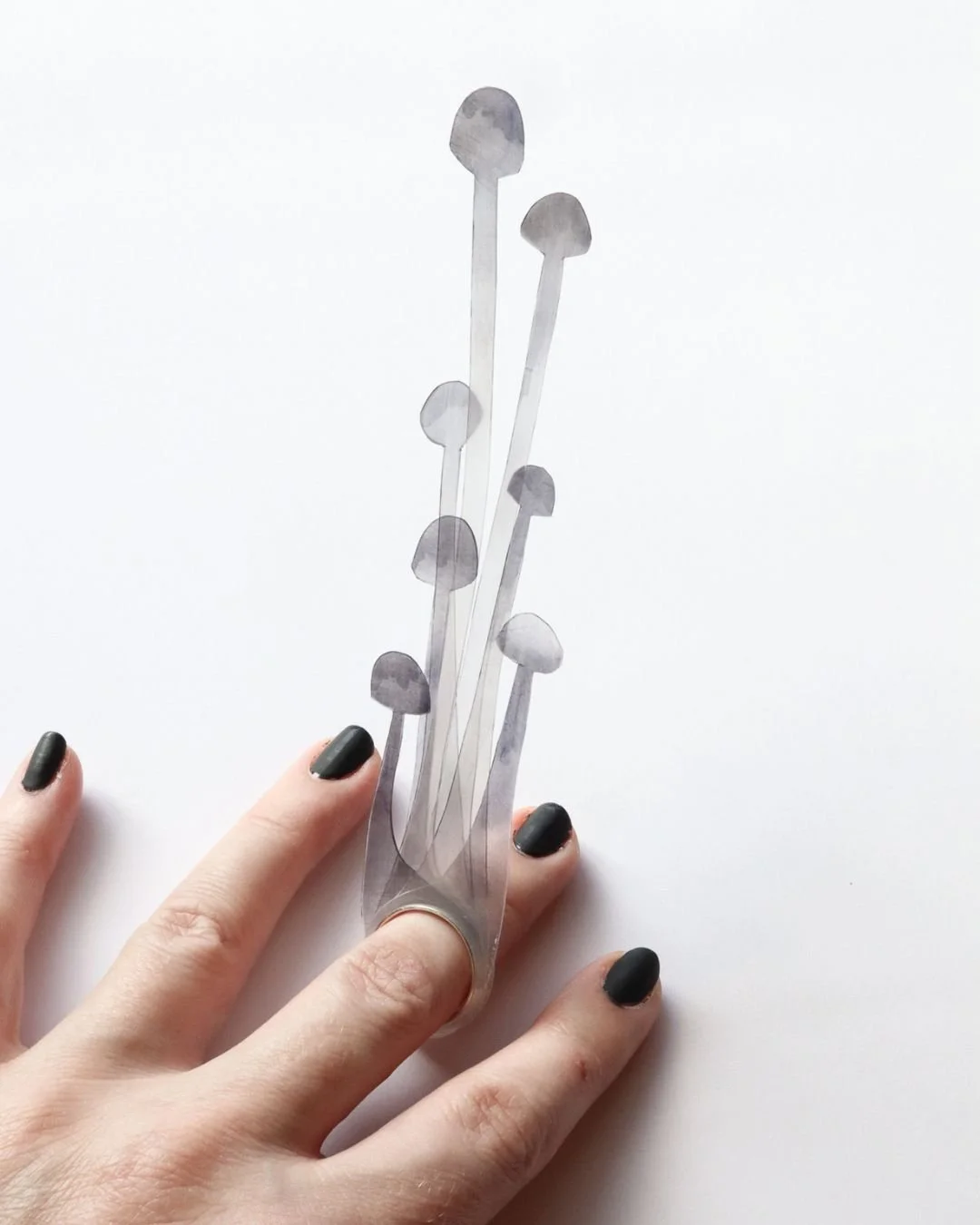
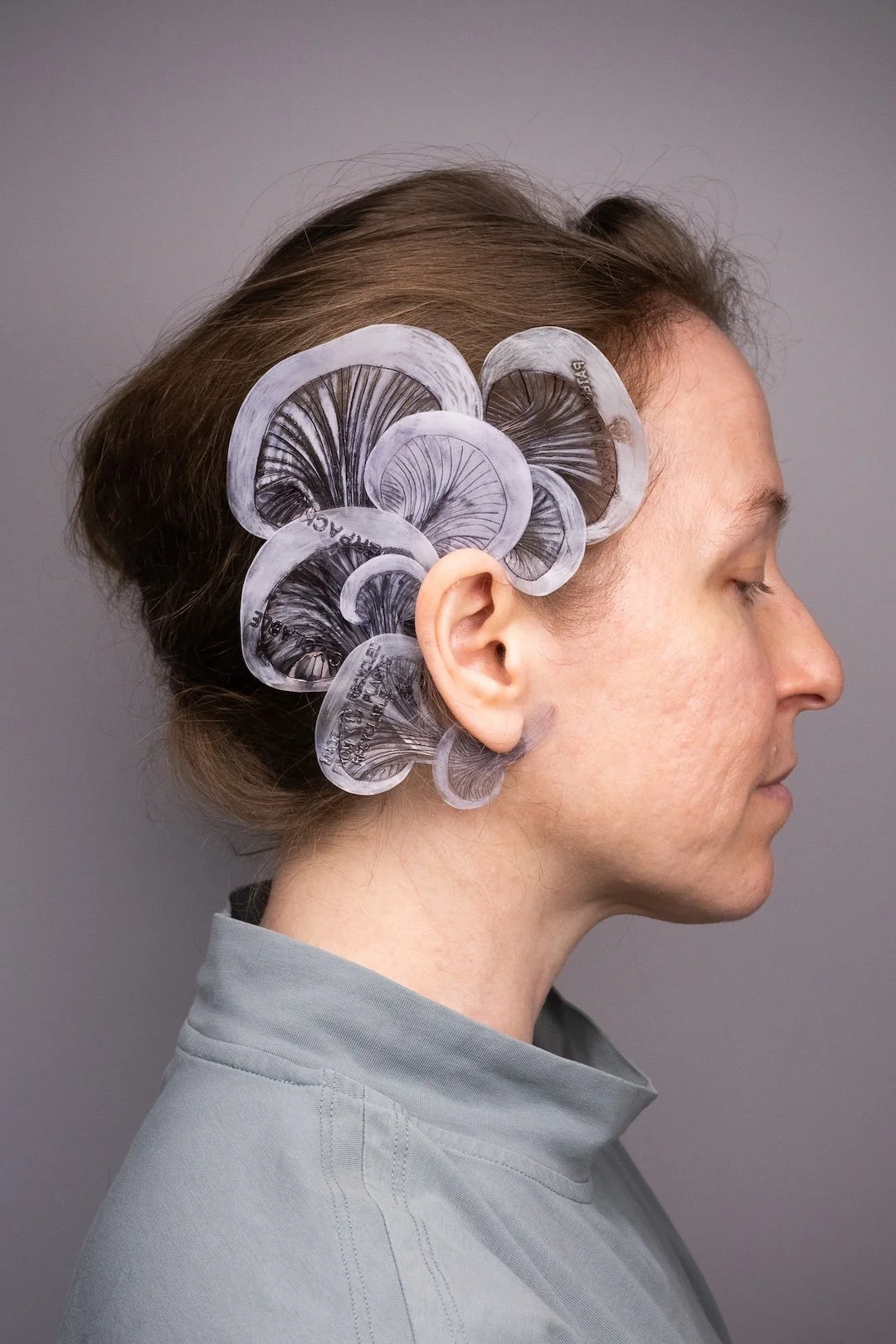
For my current body of work, I have been learning about Victorian mourning jewelry, reliquaries, mourning culture, ruins, mushrooms, and more. My inspiration soup tends to have a lot of ingredients!
How does reuse play a part in your creativity?
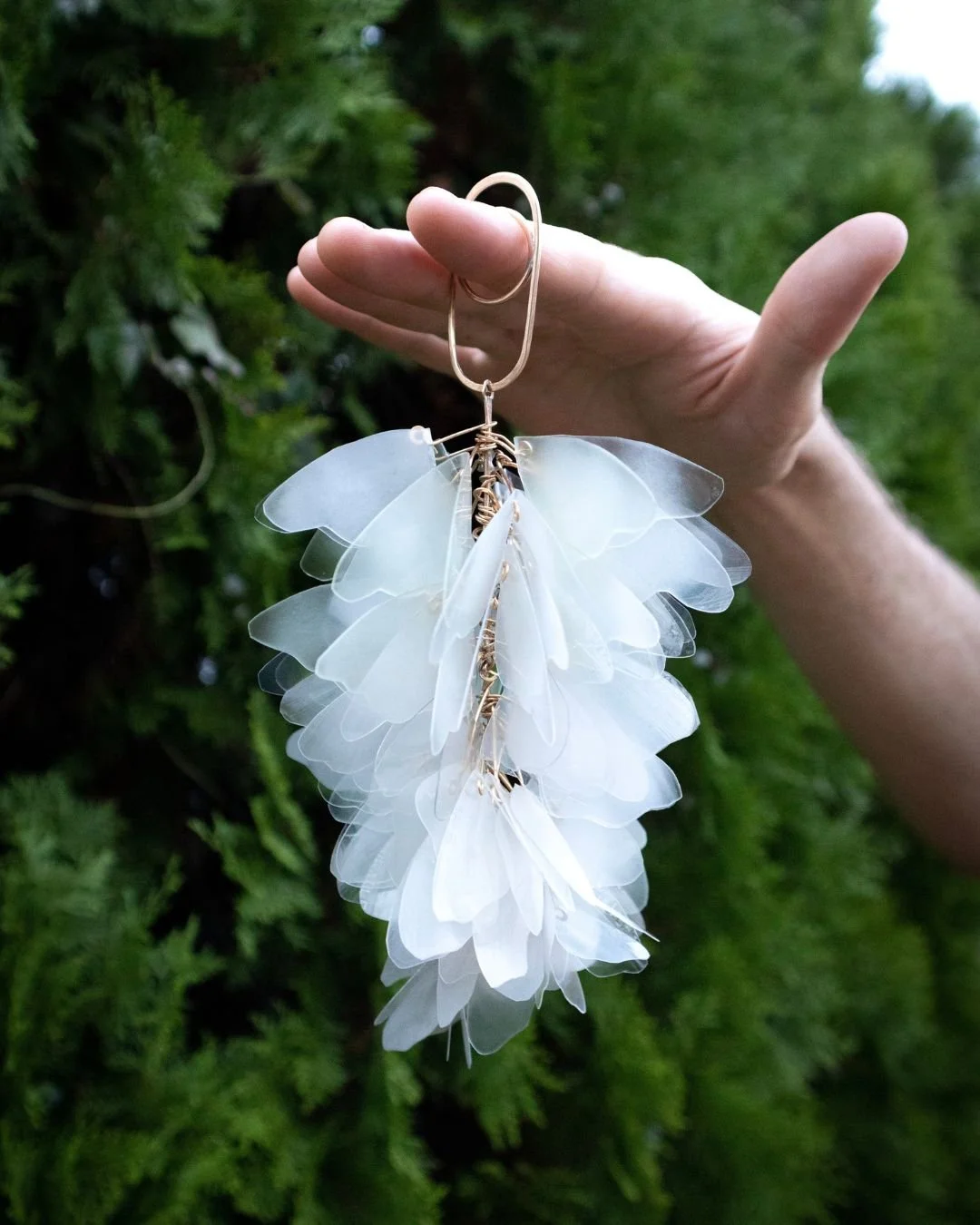
Reuse is not just a material choice in my work, it is part of how I think. I love the challenge of starting with something that already has a history and figuring out how to see it differently. A plastic container is designed to hold berries, a grocery bag is designed to carry something home, and a school folder is designed to hold papers. I’m interested in what happens when those objects are given a completely different purpose.
Reuse also introduces constraints, and I find those constraints creatively exciting. Instead of starting with an unlimited range of materials, I have to pay attention to what is actually available: its color, thickness, texture, shape, flaws, and previous life. Sometimes those limitations lead me somewhere I wouldn’t have found otherwise.
Do you ever donate materials to ACR? If so, what compels you to donate?
Yes! Being an artist often means experimenting with new tools and new materials. Sometimes you find something that resonates with you and sometimes it doesn’t. I love going to ACR in search of new materials to try and getting to donate the ones that I tried but that didn’t fit into my process.
Where can we find out more about your work?
You can find my work, studio process, upcoming classes, and other projects on my website and social media. I share a lot of the experimentation behind my work as well as finished jewelry, so following along is a good way to see what I’m currently making and thinking about.
https://www.charityridpath.com/

This project is supported in part by an Elevate Grant of Austin Arts, Culture, Music and Entertainment.